

Edge Data Center Construction: Bringing Computing Power Closer to You


.png)
What Is Edge Data Center Construction and How Does It Work?
Edge data center construction creates smaller, high-performance facilities near the people, devices, roads, campuses, and businesses generating data. Processing information locally reduces network distance and latency while improving resilience and supporting real-time applications. A successful edge facility requires the right site, reliable power, backup systems, cooling, fiber connectivity, security, fire protection, noise control, and room for maintenance and expansion. These sites may operate independently or connect to larger regional data center networks.
Your phone, car, home, and investments all rely on something you rarely notice: the buildings that keep the digital world running. As more experiences happen in real time, the old model of large, distant data centres is no longer enough. Edge data centre construction brings computing power closer to the people and places that need it.
For landowners, developers, and forward-thinking communities, this change is practical and real. It affects how sites are chosen, how buildings are planned, and how long-term value is built. Like luxury homes or master-planned developments, location, performance, and future readiness guide smart choices. This article explains what edge facilities are, how they are built, and why choosing the right partners is key to turning land into strong, smart infrastructure.
What Edge Data Centres Are and Why They're Being Built Nearby

Edge data centres bring processing closer to where data is created. Instead of sending everything to faraway hubs, edge data center construction builds small, high-performance facilities near homes, roads, campuses, and businesses. The main goal is to reduce distance, lower delays, and support new digital experiences.
Decentralized and Micro-Facilities
The industry is moving from a few large hubs to a network of smaller, spread-out facilities. This includes micro data centers, and some California cities now allow these in dense neighborhoods and along major transit routes to meet local needs. Specialized edge data center builders design these small sites to run quietly, securely, and reliably in limited spaces while still connecting to bigger regional networks.
Speed and Latency as the Primary Drivers
Milliseconds can affect how well autonomous vehicles, financial trading, telemedicine, and real-time analytics work. When building edge data centers, we're shifting tasks closer to the network edge, greatly reducing delays and improving response times. Skilled data center builders treat these facilities as mission-critical, so power, cooling, and connectivity are designed with the same care as large campuses.
Why Edge Infrastructure Matters More Than Ever
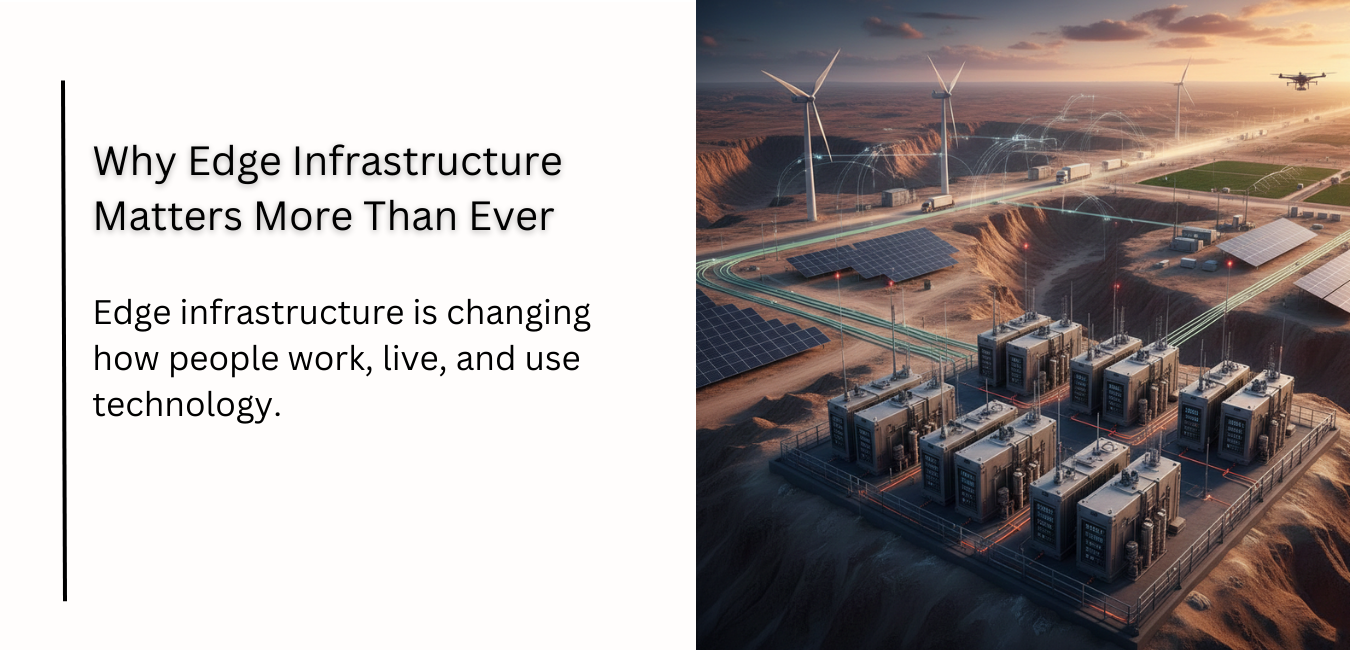
Edge infrastructure is changing how people work, live, and use technology. By putting computing and storage close to the communities they serve, edge data center builders help create smarter cities, safer roads, and better digital experiences.
Faster Insights Through Local Processing
When data is processed locally rather than sent far away, decisions can be made in real time. Edge data center construction enables factories, hospitals, and logistics centers to use up-to-date data rather than outdated information. These projects are mission-critical, with robust systems that keep working even under network pressure.
Enabling Next-Generation Technologies
IoT devices, 5G networks, AR/VR, and smart city sensors all create large, constant streams of data. Micro data centers, which some California developers are testing, provide a nearby location for processing this data. Skilled edge data center builders bring together hardware, connectivity, and security so these new technologies have a strong, reliable base.
Improved User Experience
Streaming, gaming, mobile apps, and connected devices all work better when supported by local edge facilities. With well-planned edge data center construction, services bounce back faster from problems and respond more quickly to users. Data center builders focus on reliability and performance, so life improves without anyone noticing the infrastructure.
Key Aspects of Edge Data Center Construction
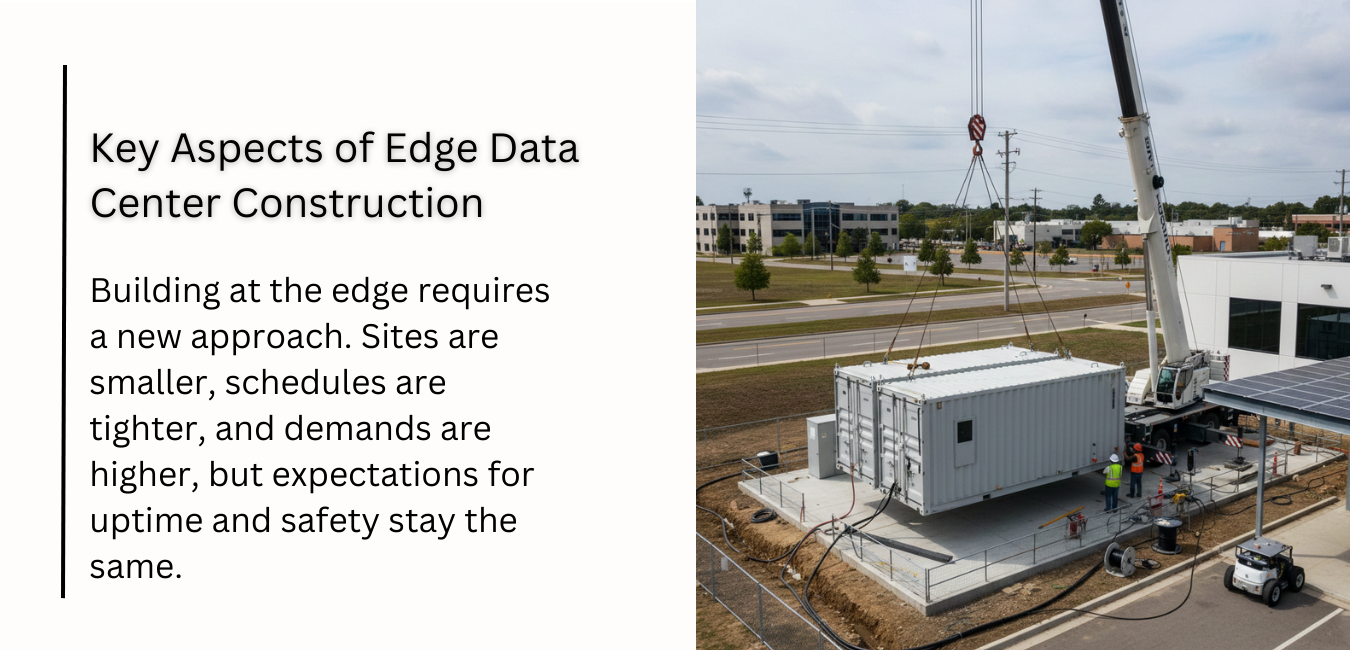
Building at the edge requires a new approach. Sites are smaller, schedules are tighter, and demands are higher, but expectations for uptime and safety stay the same. Edge data center construction uses proven methods from large campuses and adapts them for smaller, spread-out locations.
AI-Ready Infrastructure
AI tasks require significant power and advanced cooling in small spaces. The way AI is reshaping data center construction is clear in the shift toward liquid and hybrid cooling for GPUs and CPUs, so heat is handled without sacrificing performance. These AI-focused edge facilities are mission-critical, with backup systems and monitoring to keep them running 24/7.
Modular and Scalable Design
Modular designs let owners begin with a small setup and add more as demand increases, which aligns with emerging modular data center design and construction trends across the industry. With this method, contractors and builders put together standard blocks of power, cooling, and IT space that can be used in different locations. Careful edge data center construction helps developers grow capacity over time instead of building too much at the start.
Sustainability-Focused Engineering
Communities want quiet, efficient, environmentally friendly infrastructure. Contractors use high-efficiency, waterless cooling and more efficient power systems to reduce strain on the grid. These sustainable choices matter most for mission-critical projects near homes or mixed-use areas.
Site Selection and Evaluation for Edge Facilities
The best edge sites are close to users and have access to power, fiber, and the right zoning. Finding this balance is tricky, so professional site evaluation services are very important.
Balancing Proximity and Power Access
Being close to high-demand areas is important, but having sufficient power and connectivity is just as critical. Site evaluation teams check grid capacity, easements, and future upgrade options before choosing a site. After that, contractors and edge data centre builders work together to determine what can be built and when it can be ready.
The Role of Site Evaluation Services
Good site evaluation services do more than just check zoning. They review environmental limits, access roads, utility connections, and long-term risks. For mission-critical projects, this early work helps owners avoid surprises that could delay or halt edge data centre construction once planning begins.
Construction Challenges—and How the Industry Is Solving Them
Building small, high-density facilities near people and businesses brings unique challenges. Heat, crowding, complex utility work, and tight deadlines are issues that skilled data center builders handle every day.
Managing Extreme Power Density
Powerful AI chips and dense racks generate significant heat in confined spaces. Treating these builds as mission-critical means designers need to go beyond standard air cooling. By using advanced liquid and hybrid cooling in edge data center construction, builders control temperatures without needing more space.
Advanced Cable Management Strategies
Power and data cables can easily cause heat and maintenance problems. Contractors and data center builders plan organized cabling, containment, and pathways to keep systems neat and easy to reach. Good designs make operations safer, improve airflow, and make upgrades easier throughout the facility's life.
Building Mission-Critical Systems in Compact Environments
It's harder to build backup systems for power, cooling, and networking in small spaces, but it's still necessary. Experienced edge data centre builders draw on strategies from large projects and adapt them for smaller sites, including modular power rooms, flexible layouts, and stacked systems. Close teamwork with contractors makes sure every bit of space helps keep things running.
Why the Right Builders and Partners Make the Difference
Edge projects require skills beyond regular commercial construction. The best results come from specialized edge data center builders, experienced data center builders, and infrastructure contractors working together as one team from start to finish.
Working with Specialized Edge Data Center Builders
Edge-focused teams know how to handle telecom integration, live network changes, and strict operating limits. Their experience with complex, mission-critical projects delivers safer, faster results at the edge. When combined with early site evaluation, these builders help owners go from idea to working assets with fewer surprises.
Integrated Infrastructure Contractors and Delivery Models
When contractors and data center builders work as one team, schedules, budgets, and technical choices stay on track. This teamwork is especially important for mission-critical projects, where delays or mistakes can affect both money and operations. Clear, unified leadership helps deliver reliable results.
What Edge Data Centers Mean for Forward-Thinking Landowners and Developers
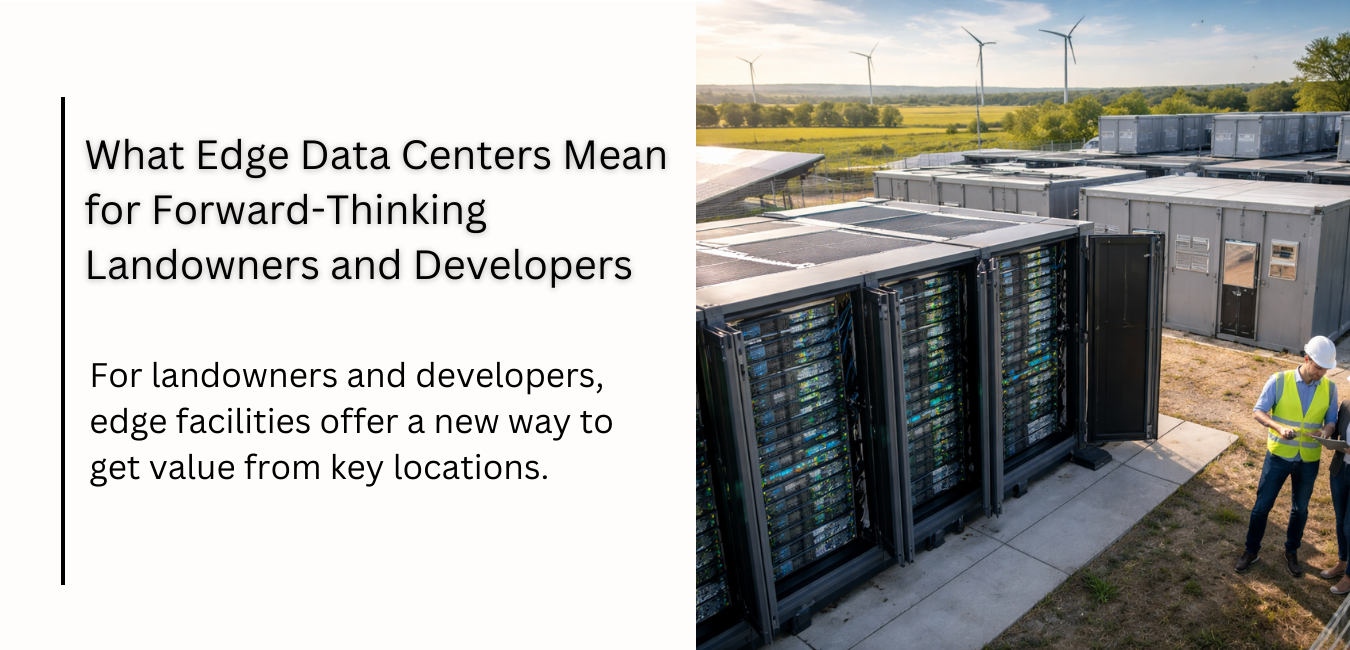
For landowners and developers, edge facilities offer a new way to get value from key locations. Land that was once just for homes or stores can now support quiet, high-performing infrastructure for the community.
Unlocking Value from Strategically Located Sites
Unused land near power and fibre lines can become ideal sites for edge data centres or small hubs, such as micro data centres, which are becoming popular in California. With good site evaluation services, landowners can identify which properties are suitable and how they fit into broader plans.
Planning for a Digitally Powered Future
As digital needs grow, communities that support edge facilities gain an advantage. Developers who plan layouts and approvals with edge data centre builders can add future mission-critical projects without altering the neighbourhood's feel. The result is a place that looks timeless but works with the latest technology.
How Element Homes is Bringing Edge Intelligence Into the Built Environment
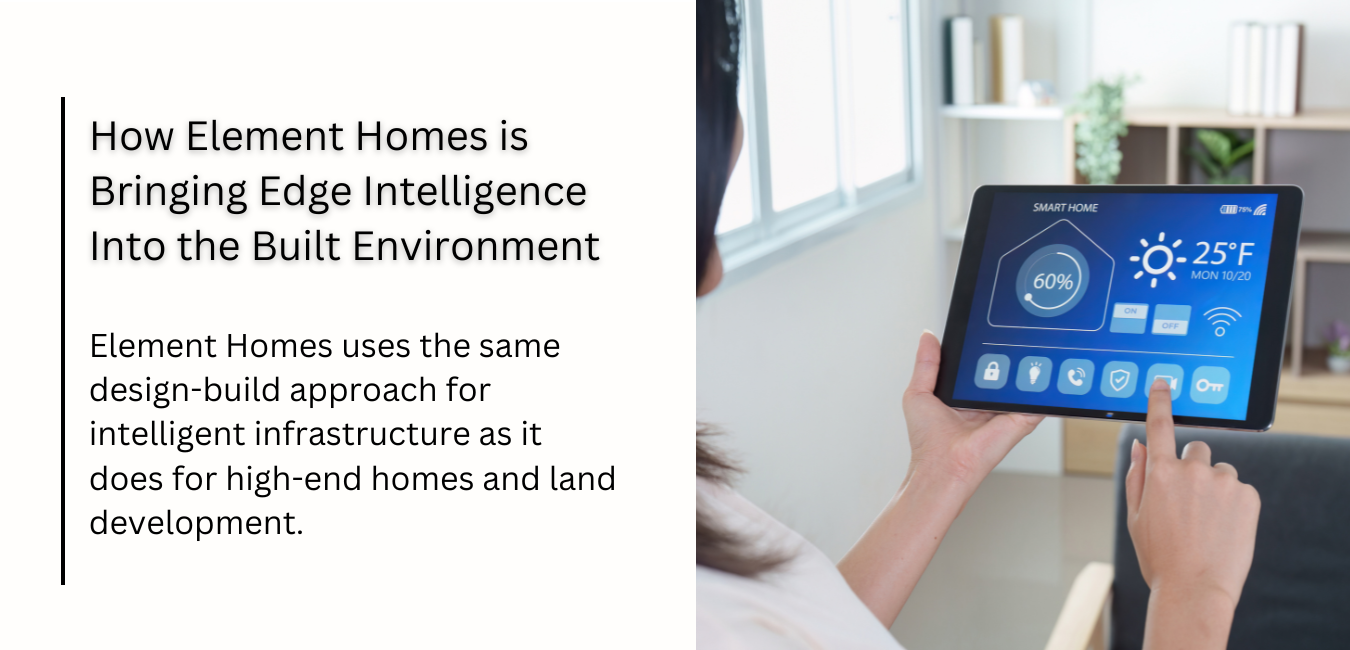
Element Homes uses the same design-build approach for intelligent infrastructure as it does for high-end homes and land development. Our experience with complex utilities, entitlements, and construction schedules creates a natural bridge to edge data center construction and related systems.
From Turnkey Residential Delivery to Edge-Ready Infrastructure
Managing architecture, permitting, land development, subdivision, and construction under one contract mirrors how leading data center builders structure integrated delivery. By coordinating closely with infrastructure contractors, we can adapt that model for projects that touch or support edge infrastructure. The same discipline that protects homeowners can be applied to utility-scale and digital assets.
Designing Homes and Communities That Support Intelligence
Future-ready communities depend on resilient power, high-capacity connectivity, and thoughtful building envelopes. Drawing on the practices of edge data center builders and leaders in mission-critical projects, we design environments that can interface with or host advanced infrastructure near residential and mixed-use areas. Collaboration with site evaluation services teams helps align early planning with long-term potential.
Why Our Integrated, In-House Model Matters
By coordinating design, engineering, and construction in-house, we operate with the agility of experienced infrastructure contractors while still delivering a residential-grade client experience. This integrated approach supports projects that sit adjacent to or incorporate mission-critical projects and intelligent infrastructure. Through our Element Infrastructure vertical, we help clients evaluate sites, plan utilities, and shape resilient, future-ready places.
Conclusion
Edge facilities are changing the foundation of the digital world. With smart edge data center construction and skilled builders, computing power is moving closer to homes, businesses, and key services. Supported by experienced contractors and careful site evaluation, these important projects turn good locations into quiet sources of long-term value.
Element Homes applies the same careful planning and integrated approach to the built environment, matching high-end development with future digital needs. Contact us to learn how your land, community, or project can benefit from edge-ready planning and smart infrastructure. Reach out to Element Homes to discuss how we can help you build resilient, future-focused spaces that support both lifestyle and technology.

Related POsts
Building a Luxury Custom Home in Atherton: Costs, Permits, Timelines & Design
Planning a luxury custom home in Atherton? Learn about costs, permits, timelines, tree rules, design choices, and what to review before construction.
Read moreFixed-Price vs. Cost-Plus Construction Contracts: Which Is Better for a Custom Home?
Compare fixed-price and cost-plus contracts for a custom home. Understand costs, flexibility, risks, change orders, and which option fits your project.
Read more