

Longevity Home Design: Key Features for a Healthier Luxury Custom Home


.png)
A house can photograph beautifully and still feel tiring to live in. Too much glare in the morning. A stuffy bedroom at night. A gym that rarely gets used because it sits far from the shower or garden.
That is why longevity home design is gaining attention in high-end residential buildings. It brings comfort, healthy routines, and long-term use into the planning stage.
For a luxury custom home, that can shape windows, mechanical systems, lighting, acoustics, materials, wellness rooms, and future accessibility.
A healthier home starts with the basics you notice every day
Some wellness choices are visible. Others disappear behind drywall. Airflow, filtration, plumbing, insulation, and material choices belong in that second group. Good luxury home builders plan them early because later changes can be costly.
Cleaner air without turning the house into a science project
Indoor air is affected by cooking, dust, outdoor pollution, cleaning products, finishes, and furnishings. A well-planned system can combine fresh-air ventilation, strong filtration, humidity control, and effective exhaust in kitchens and bathrooms.
The goal is comfort you can feel without thinking about the equipment. Filters and mechanical components in a luxury custom home should also stay easy to service.
Water planning that fits the household
Some owners care most about drinking water. Others want whole-house treatment. The right choice depends on the water source, local conditions, maintenance preferences, and how the family uses the home.
Thoughtful custom home plans leave room for filters, tanks, drains, shutoffs, and replacement parts before the utility room gets crowded.
Materials that feel good and age well
Healthy material choices do not need to make a house look plain. Stone, solid wood, tile, wool, lime-based finishes, and carefully selected paints can all fit a refined home design.
Homeowners may also review adhesives, cabinetry, coatings, and engineered wood products for indoor emissions. Good selections balance appearance, maintenance, and durability.
Light changes how a home feels from morning to night
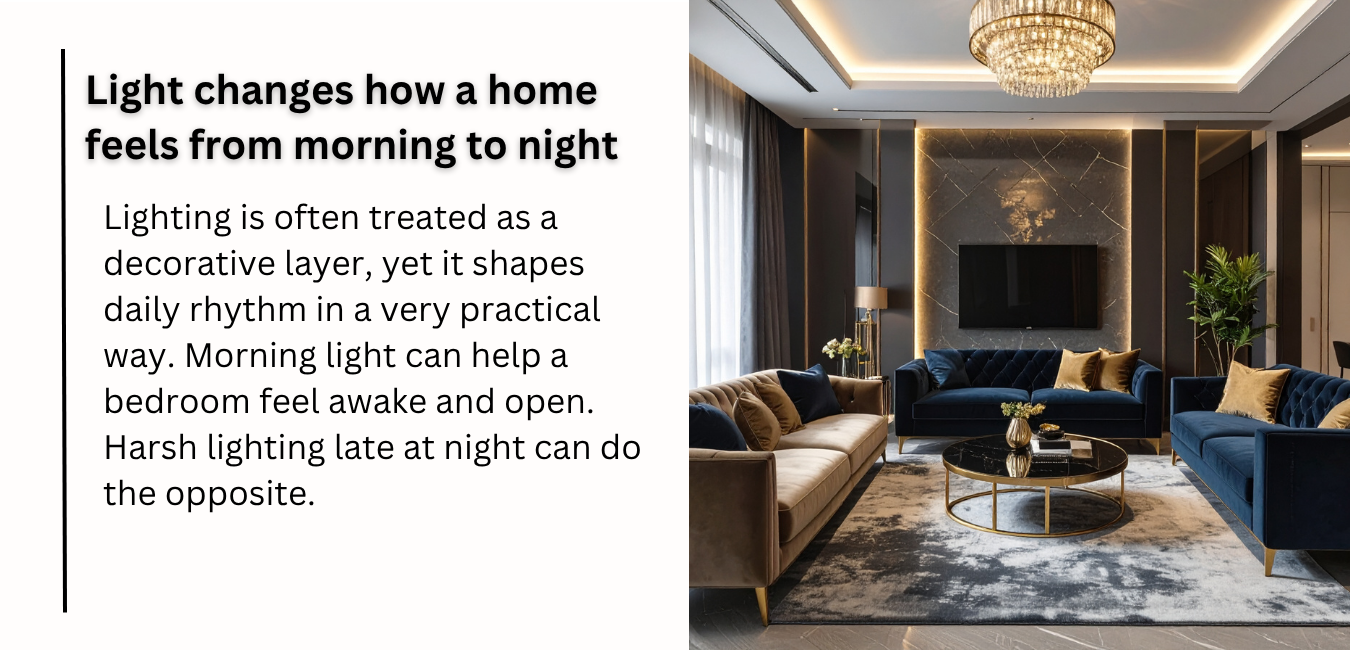
Lighting is often treated as a decorative layer, yet it shapes daily rhythm in a very practical way. Morning light can help a bedroom feel awake and open. Harsh lighting late at night can do the opposite.
Experienced high-end home builders look at daylight and electric lighting together instead of treating them as separate decisions.
Put windows where daylight is useful
A wall of glass is not automatically better. A bedroom may benefit from morning sun, while a west-facing office can become uncomfortable if glare is not controlled.
Window size, orientation, overhangs, exterior shading, privacy, views, and furniture placement should all work together. Skilled custom home builders study these relationships while the floor plan is still flexible, not after the rooms have already been fixed.
Give each room several lighting moods
One bright ceiling fixture rarely creates a comfortable room. Layered lighting works better because it gives people choices.
A living room might use soft ambient light in the evening, focused task lighting for reading, and subtle accent lighting around art or millwork. In a luxury custom home, automated shades and tunable lighting can be helpful too, as long as the controls remain simple enough that everyone in the house actually uses them.
Protect the bedroom from unnecessary stimulation
Bedrooms need a different approach from kitchens, gyms, or entertaining spaces. Darkness, quiet, temperature control, and warm low-level lighting can all help the room feel calmer at night.
Some homeowners prefer automated shades and lighting scenes. Others want almost no visible technology near the bed. Good home design leaves room for either preference.
Wellness rooms should earn the space they take up
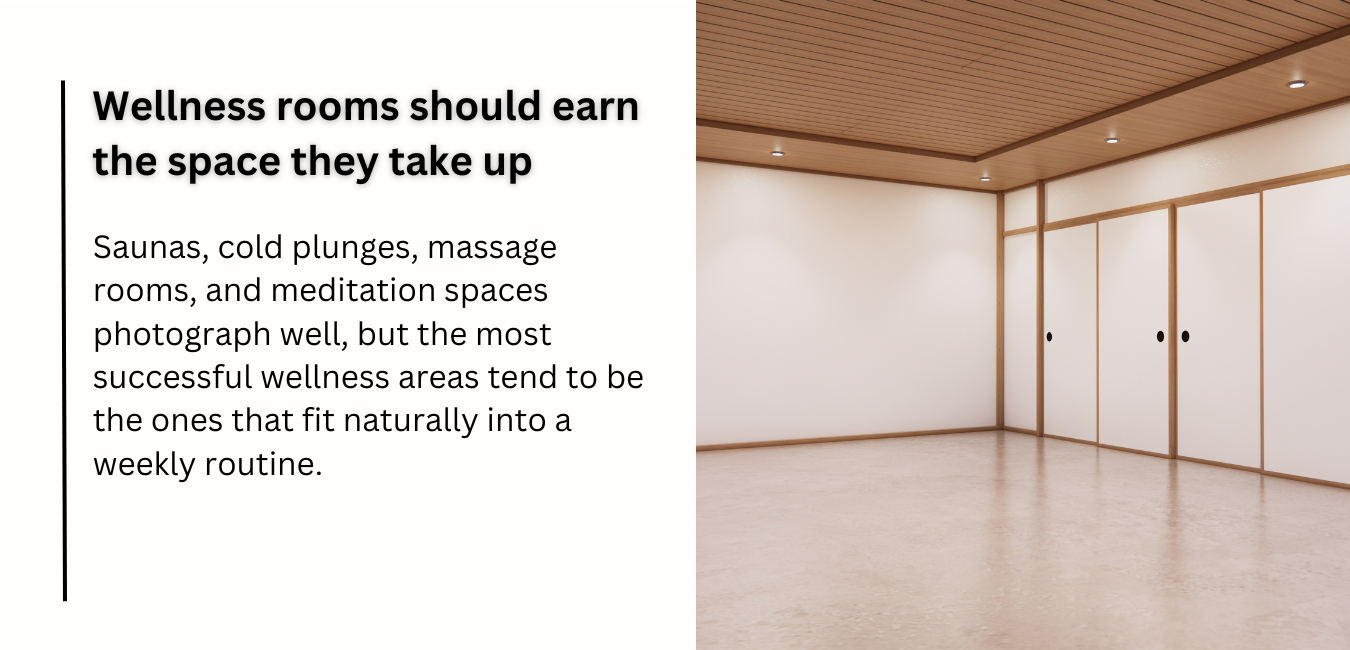
Saunas, cold plunges, massage rooms, and meditation spaces photograph well, but the most successful wellness areas tend to be the ones that fit naturally into a weekly routine.
For luxury home builders, the useful question is whether the household will actually use the space.
Build a recovery area around real habits
A private wellness room can be as simple as a quiet stretch space beside a steam shower, or it can include several pieces of specialized equipment.
Possible features include:
- a sauna or steam shower with proper ventilation and waterproofing
- a cold plunge with sensible drainage and slip-resistant flooring
- space for stretching, massage, meditation, or recovery equipment
The plumbing, electrical load, drainage, ventilation, and maintenance access need to be planned before construction gets too far along.
Let movement happen outside the gym too
A dedicated fitness room is useful for many households, but movement does not have to begin and end there. A staircase on a natural circulation route, a garden path, direct pool access, or a covered outdoor area can all encourage activity.
Well-connected custom home plans can place a gym near a bathroom, laundry room, mudroom, or outdoor shower. Those relationships can decide whether a space gets used.
Give quiet its own place in the floor plan
A busy household can have video calls, workouts, movies, cooking, music, and guests happening at the same time. Noise control matters.
Room zoning, insulation, solid-core doors, acoustic wall assemblies, and the careful placement of mechanical equipment can protect bedrooms and offices. Quiet in a luxury custom home should be purposeful, not incidental.
Nature and durability belong in the same conversation
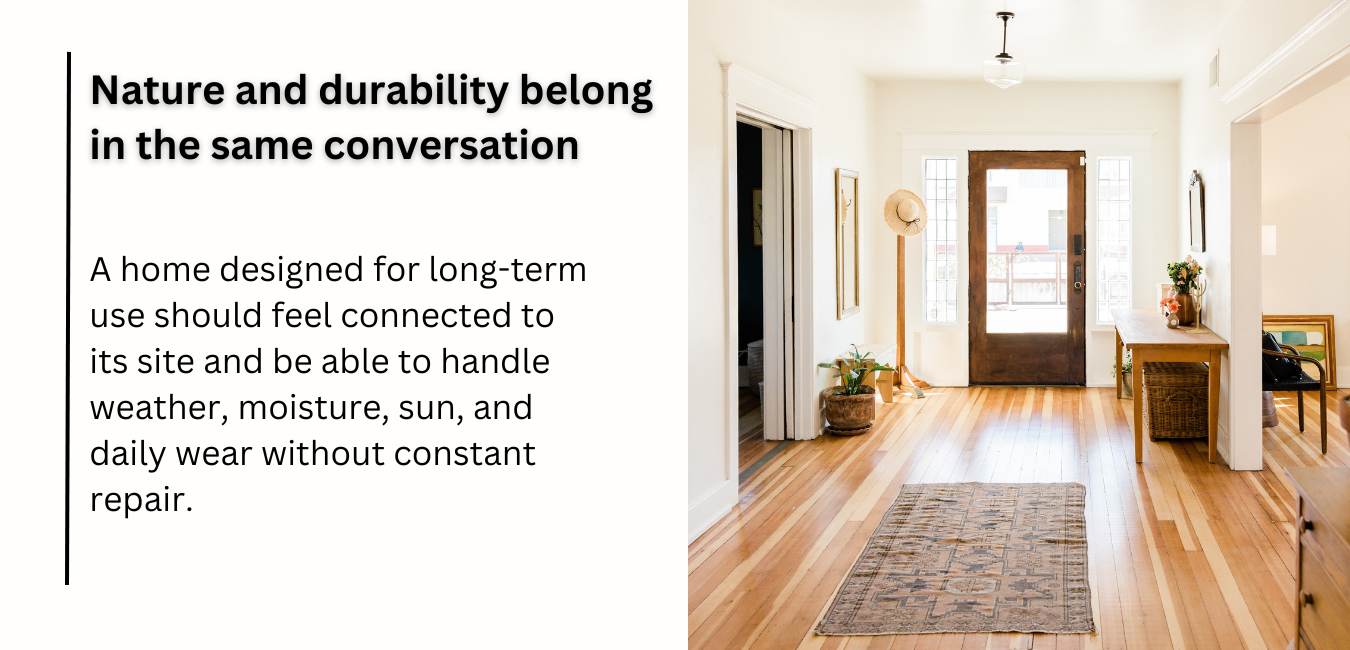
A home designed for long-term use should feel connected to its site and be able to handle weather, moisture, sun, and daily wear without constant repair.
That is one reason longevity home design often overlaps with biophilic ideas and durable construction. The house should feel pleasant now and still make sense years from now.
Bring nature into rooms people actually use
Biophilic home design does not require filling every corner with plants. It can be as simple as framing a garden view from the kitchen, opening a bedroom to a private courtyard, or creating a shaded terrace that feels connected to the living room.
Natural textures might also help. Wood, stone, clay and woven textures give warmth without ornamental excess.
Treat moisture control as part of luxury
Water intrusion can damage finishes and lead to expensive repairs. Much of the protection is invisible.
Reliable custom home builders pay particular attention to roof edges, flashing, window openings, showers, balconies, drainage, and where one material joins another. These subtleties seldom make it into a glossy project photo, but they count every wet season.
Choose finishes that can live with the house
Some materials improve with age. Homeowners planning a luxury custom home may prefer stone that develops character, repairable solid wood, or metal finishes that age naturally.
The key is knowing where each material belongs and how much care it needs.
Plan for the version of your household you have not met yet
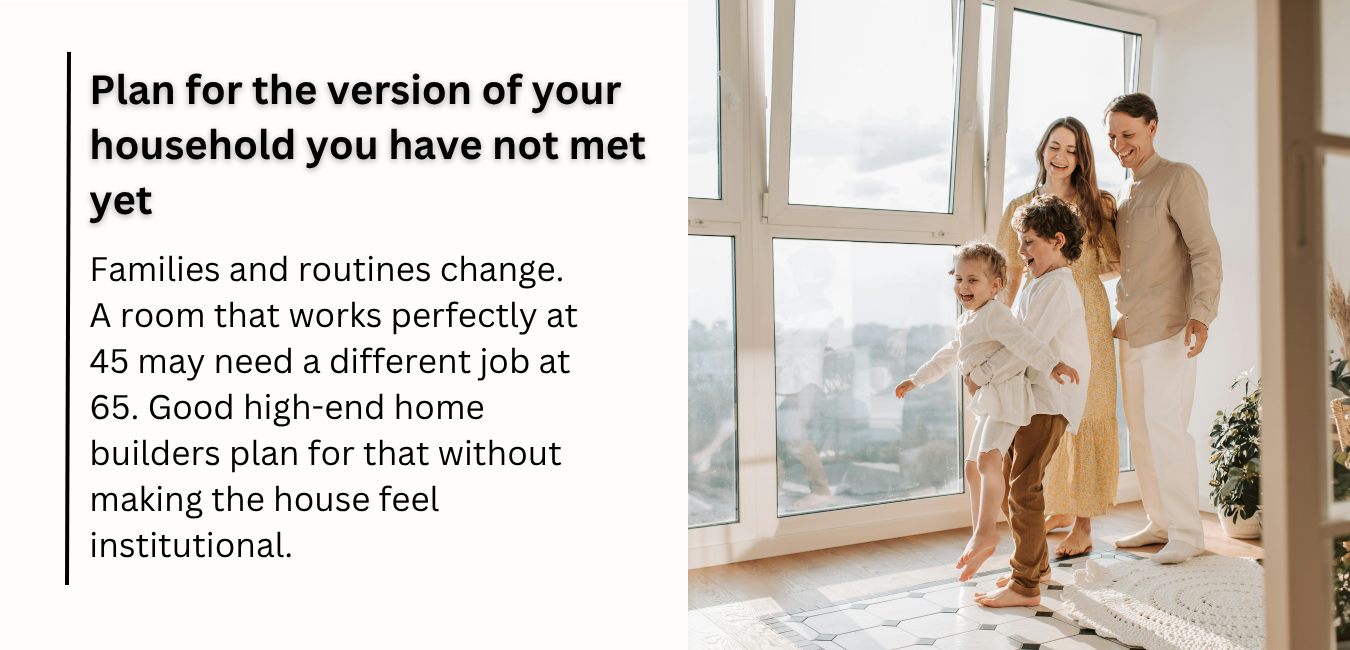
Families and routines change. A room that works perfectly at 45 may need a different job at 65. Good high-end home builders plan for that without making the house feel institutional.
Give rooms permission to change
A guest room can later become an office. A playroom may become a study. A fitness room could eventually serve as a bedroom.
Flexible custom home plans can support those changes with sensible room sizes, nearby bathrooms, storage, and enough electrical or data capacity for a different use later.
Hide future options in the structure
Some upgrades are easier to prepare for during construction, including wider clearances, curbless shower framing, future elevator space, or extra conduit for technology.
These choices can stay visually discreet while giving the owner options.
Keep technology useful, not distracting
Smart-home technology changes quickly. Wiring routes, power, network coverage, shades, sensors, and control locations should be planned with flexibility in mind.
Experienced custom home builders can coordinate the concealed infrastructure and allow for future equipment changes. This is important in a luxury custom home, where owners desire sophisticated technology but don’t want the panels and controls that dominate the architecture.
A longevity home should still feel like your home
Good longevity home design should disappear into everyday life. You notice the fresh air, the quiet bedroom, the soft evening light, the useful storage, and the way the house opens to the garden. You do not need to think about the planning behind those details every day.
Build around daily life, then refine the luxury
A well-planned luxury custom home should feel personal now and remain comfortable as routines and needs change. Health-conscious planning works best when it supports the owner's actual habits instead of following a list of fashionable upgrades.
Element Homes can help shape those priorities into a custom residence where architecture, comfort, materials, and long-term use work naturally together.
Contact Element Homes to discuss a custom home shaped around your lifestyle, design preferences, wellness priorities, and long-term plans.
Frequently asked questions
What does longevity home design mean?
Longevity home design is about how a home can encourage comfort, healthy living, adaptability and durability. It can affect air quality, water, lighting, sleeping areas, acoustics, materials, movement, links to the outside and future accessibility.
Which features should be planned first?
Start with anything that affects structure or hidden systems. Ventilation, filtration, plumbing, waterproofing, window placement, electrical controls, acoustic assemblies, and larger wellness rooms are easier to solve during early home design.
Does every luxury custom home need a wellness room?
Nope. A luxury custom home can encourage healthy habits through daylight, fresh air, peaceful bedrooms, comfortable circulation, durable materials, and outdoor access. A dedicated wellness room is only reasonable if it suits the home.
Can longevity features be added during a renovation?
Some do. Renovation may include air filtration, water treatment, lighting controls, low-emission finishes, acoustic work and selected wellness devices. Extensive construction may be required for large alterations to room layouts, glass, plumbing or ventilation.
What should I ask custom home builders before adding wellness features?
Ask how the feature will affect plumbing, ventilation, structure, electrical work, waterproofing, maintenance and replacement. A good custom home builder will clarify which decisions need to be made early on and which can wait.

Related POsts
Building a Luxury Custom Home in Atherton: Costs, Permits, Timelines & Design
Planning a luxury custom home in Atherton? Learn about costs, permits, timelines, tree rules, design choices, and what to review before construction.
Read moreFixed-Price vs. Cost-Plus Construction Contracts: Which Is Better for a Custom Home?
Compare fixed-price and cost-plus contracts for a custom home. Understand costs, flexibility, risks, change orders, and which option fits your project.
Read more