

Energy-Efficient Server Rooms: Designing for Sustainability and Performance


.png)
Private residences once needed little beyond Wi-Fi and a handful of devices. High-end homes, estates, and compounds now depend on advanced automation, security analytics, streaming platforms, and remote work setups that all rely on serious computing horsepower. That level of complexity calls for professional-grade backend infrastructure, not a random pile of gear in a closet.
Purpose-built, energy-efficient server rooms give that infrastructure a proper home. When designed with care, energy-efficient server rooms cut energy waste, protect uptime, and support a smarter, lower-impact property that feels effortless to live in, especially when aligned with best practices from data center design build, data center construction, and seasoned data center builders.
Why Energy-Efficient Server Rooms Matter in Modern Properties
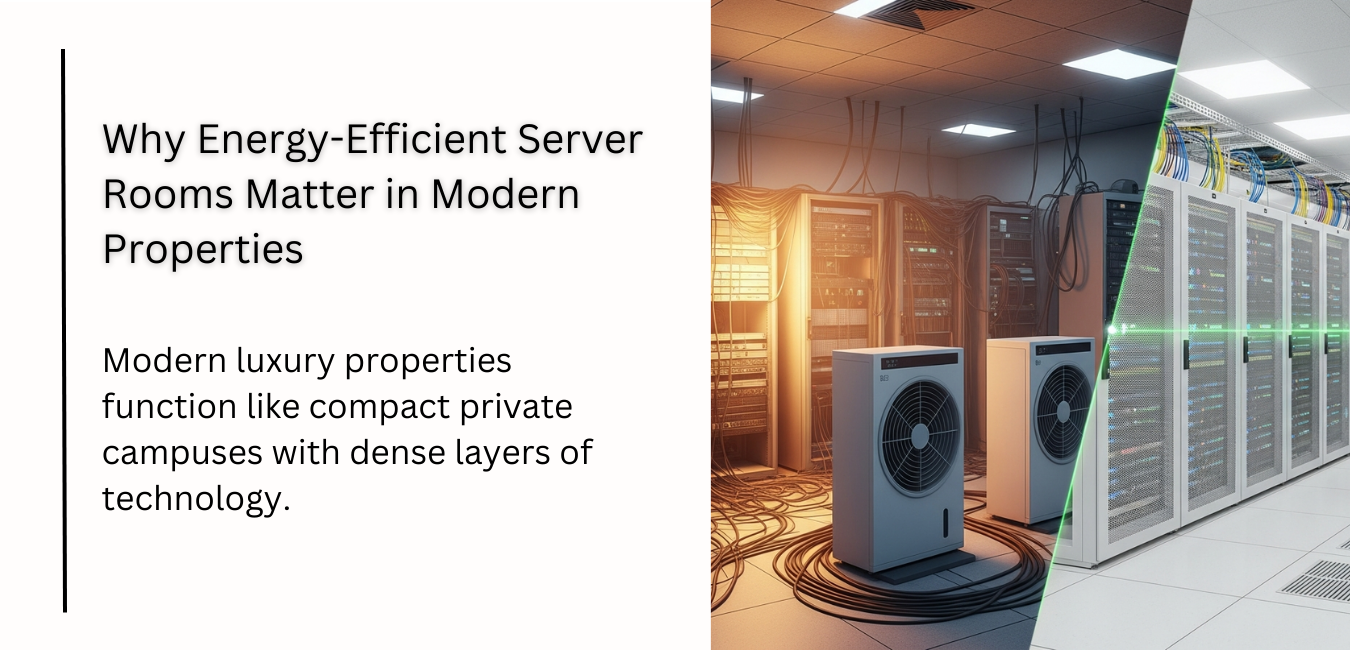
Modern luxury properties function like compact private campuses with dense layers of technology. Treating the server room as intentional space, instead of leftover square footage, turns it into a stable base for everything digital in the home, similar in discipline to compact data center construction projects and commercial-scale energy-efficient server rooms.
The Rise of On-Site Computing and Smart Systems
AI-driven automation, computer vision for security, high-resolution cameras, and local data storage all gain from low-latency, on-site computing. Owners want privacy, control, and resilience that the public cloud alone cannot always deliver, which aligns closely with edge data center construction, bringing computing power closer to you as a core design idea. As smart buildings for AI grow in sophistication, dedicated rooms for servers and networking operate like compact mission-critical projects that keep daily life running without interruption, echoing the reliability standards seen in modern data center construction and guided by expert data center builders.
Energy Efficiency as a Value and Sustainability Driver
Power-hungry equipment running around the clock can quietly become one of the property's largest energy loads. Efficient layouts, right-sized cooling, and disciplined hardware choices turn that constant demand into a controlled, predictable expense. In regions that prioritize climate goals, energy-efficient server rooms support broader sustainability plans while still delivering strong performance, especially when they borrow lessons from data center design build, high-efficiency data center construction, and rigorously tested mission-critical projects.
Core Design Strategies for Energy-Efficient Server Rooms
Successful server rooms start with physical design: how air moves, how equipment is arranged, and how technicians function in the space. These fundamentals shape every later decision about cost, reliability, and capacity, much like early planning stages in commercial data center construction and high-density energy-efficient server rooms.
Airflow Management as the Foundation
Hot and cold aisle configurations keep cool supply air and hot exhaust from mixing, so cooling systems work with physics instead of against it. Practical additions like blanking panels, side baffles, and sealed penetrations maintain clean airflow paths through equipment. These patterns draw directly from data center design build experience, adjusted to fit residential scale, and mirror airflow strategies used in enterprise data center construction and other mission-critical projects.
Smart Cable Management
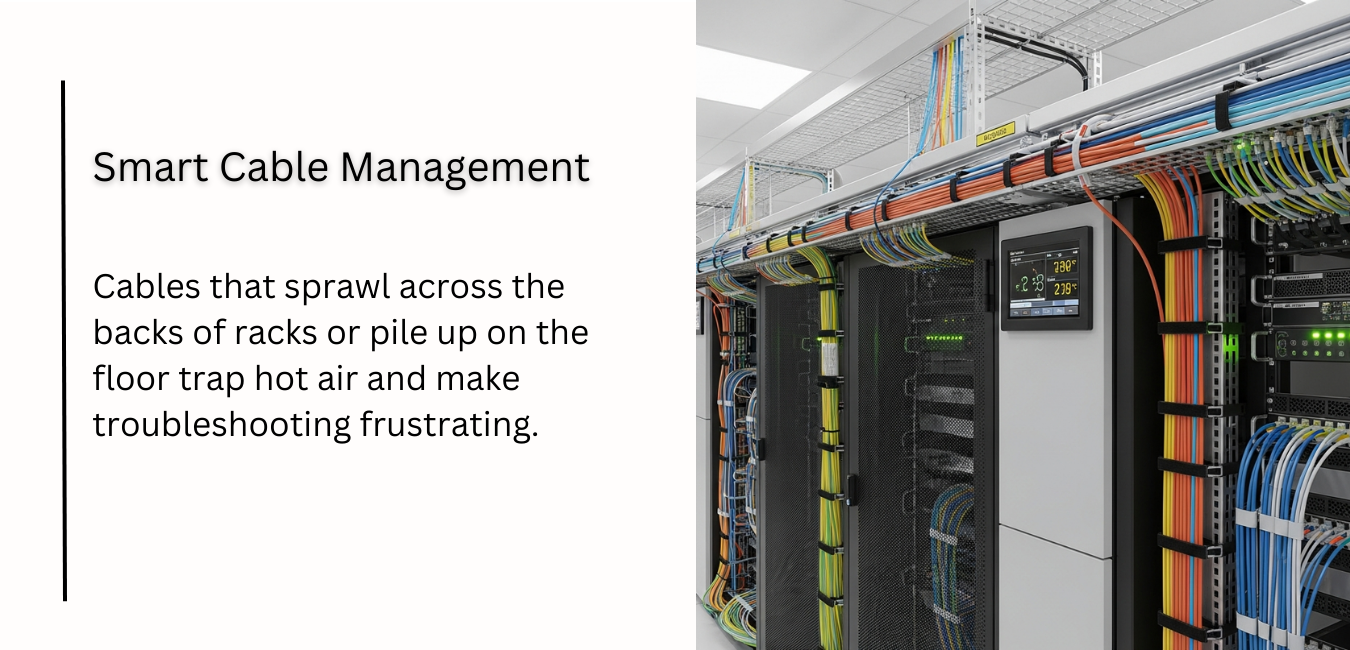
Cables that sprawl across the backs of racks or pile up on the floor trap hot air and make troubleshooting frustrating. Overhead trays or underfloor routes let air move freely while keeping pathways clear for technicians. Treating cable planning as a formal part of professional server room design services preserves both efficiency and long-term maintainability, aligning residential rooms with cabling standards used by leading data center builders in large-scale data center construction.
Cooling Optimization — The Biggest Energy Opportunity
Cooling often consumes more power than the IT hardware itself. Careful selection and tuning of cooling methods can trim a large share of the room's operating cost while supporting stable conditions, a principle shared by energy-efficient server rooms and advanced data center design, build, and construction projects.
Raising Temperature Setpoints Safely
Modern equipment is designed to run reliably at higher temperatures than older rules of thumb suggested. By following vendor guidance and watching real conditions, setpoints can rise a few degrees without putting uptime at risk. This straightforward step, used widely in mission-critical projects, often delivers immediate reductions in chiller or compressor usage and is common in high-performance energy-efficient server rooms planned during early data center construction phases.
Free Cooling and Climate-Based Strategies
In many climates, outside air sits at a suitable temperature for part of the year. Air-side economizers and similar systems can take advantage of those hours to cool the room with filtered outdoor air instead of mechanical refrigeration. When tied into smart buildings for AI, controls can select the lowest-energy option based on weather and load, following patterns that data center builders use in sustainable data center design, build, and green data center construction projects.
Precision and Liquid Cooling Options
For dense racks, GPU clusters, or AI-heavy workloads, traditional perimeter cooling may struggle. In-row cooling or rear-door heat exchangers provide targeted heat removal at the rack instead of overcooling the entire space. Some advanced homes, guided by experienced data center builders, adopt liquid-assisted solutions for specific high-density zones while keeping the rest of the room on conventional systems, borrowing ideas that often appear in discussions of top modular data center design and construction trends and next-generation data center construction for AI workloads.
Hardware Efficiency and Load Reduction
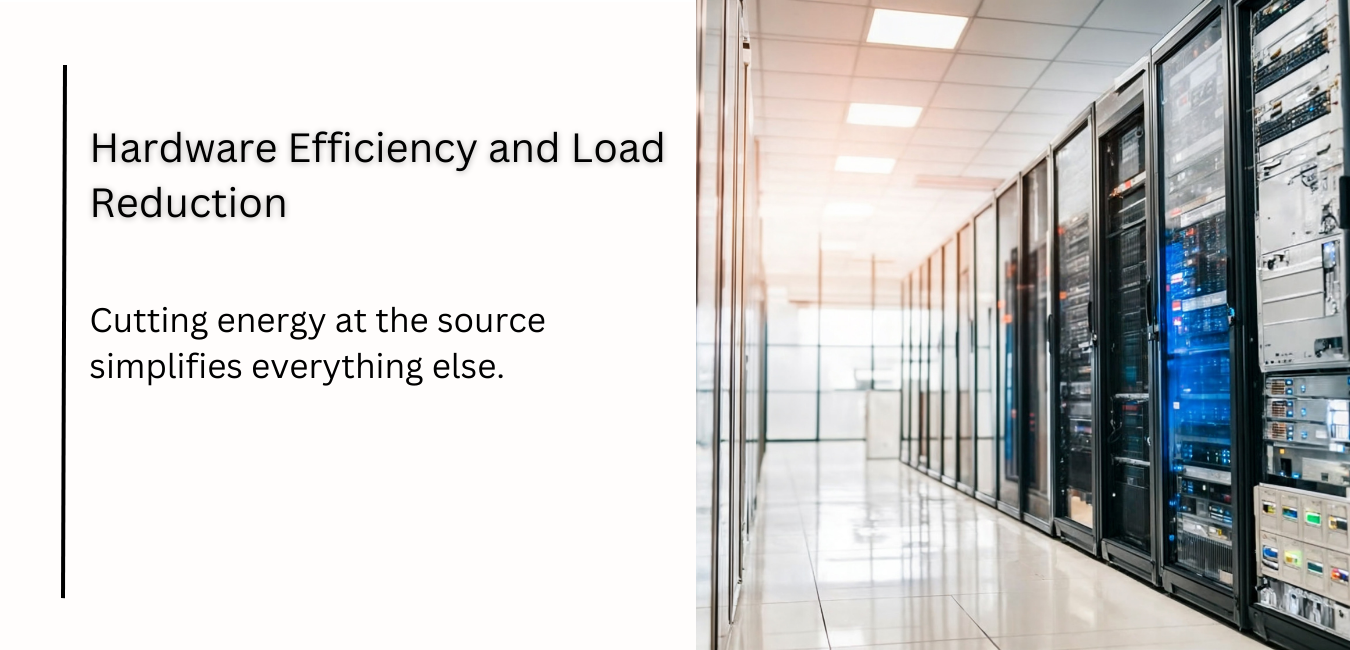
Cutting energy at the source simplifies everything else. Efficient hardware lowers heat output, reduces power consumption, and creates more headroom for future growth in both residential energy-efficient server rooms and commercial data center design and build environments.
Energy-Efficient Servers and Components
Servers with efficient power supplies, strong power management features, and high core counts per socket allow greater performance in a smaller footprint. Choosing network gear and appliances with favorable performance-per-watt metrics keeps the overall thermal profile reasonable. These choices echo the procurement standards used in commercial mission-critical projects and quietly pay off every hour of operation, aligning with practices from large-scale data center construction and high-end data center design-build programs.
Storage and Virtualization Strategies
Solid-state drives draw less power, create less noise, and generate less heat than large arrays of spinning disks, while also improving responsiveness. Virtualization groups multiple workloads onto fewer physical hosts, increasing utilization instead of constantly adding more hardware. Applying these patterns from data center design and build work lets residential environments achieve enterprise-grade performance with a compact equipment list, similar in philosophy to how micro data centers for AI startups push efficiency at a small scale and how modular data center construction projects deliver agility.
Monitoring, Automation, and Intelligent Control
Once the room is built, continuous insight and automation keep it efficient. Data turns a static design into a living system that can adapt as conditions change, which matches how energy-efficient server rooms and advanced data center design build sites operate.
Environmental Sensors and Real-Time Visibility
Distributed temperature and humidity sensors show how conditions vary between racks, aisles, and elevations. Dashboards and alerts highlight trending problems before they cause downtime. For energy-efficient server rooms, this level of visibility gives the confidence needed to operate with leaner safety margins instead of relying on overcooling, mirroring monitoring strategies that guide data center construction and long-term operation of mission-critical projects.
DCIM and AI-Driven Optimization
Lightweight DCIM tools track power, thermal conditions, and capacity, even in modest-sized rooms. Analytics can recommend adjustments to airflow, workload placement, or setpoints that reduce waste without harming reliability. Integrated with smart buildings for AI, these insights help the wider property coordinate energy use across HVAC, lighting, and IT, and they reflect how AI is reshaping data center construction across every scale of project, from micro facilities to large data center design-build campuses.
Sustainable Practices Beyond the Server Room
The sustainability story extends past racks and cooling units. Where power comes from and how the building is shaped both influence long-term environmental impact for homes and for enterprise data center construction alike.
Renewable Energy Integration
Pairing energy-efficient server rooms with rooftop solar or other on-site renewables offsets a portion of their continuous load. Intelligent controls can favor renewable supply during peak pricing windows or grid stress events. For critical systems, storage and backup approaches drawn from mission-critical projects add resilience without unnecessary waste, just as resilient power architectures are central to data center design, build, and low-carbon data center construction.
Location and Building Design Considerations
Placing server rooms in interior or partially below-grade zones often reduces ambient temperatures and daily swings. Thoughtful wall assemblies, insulation, and shading strategies limit external heat gain, easing the burden on cooling equipment. Many of these choices originate from holistic data center design and build planning that treats the building and its infrastructure as a single system and guides high-performance data center construction as well as high-end residential design.
Performance and Sustainability Benefits of Efficient Design
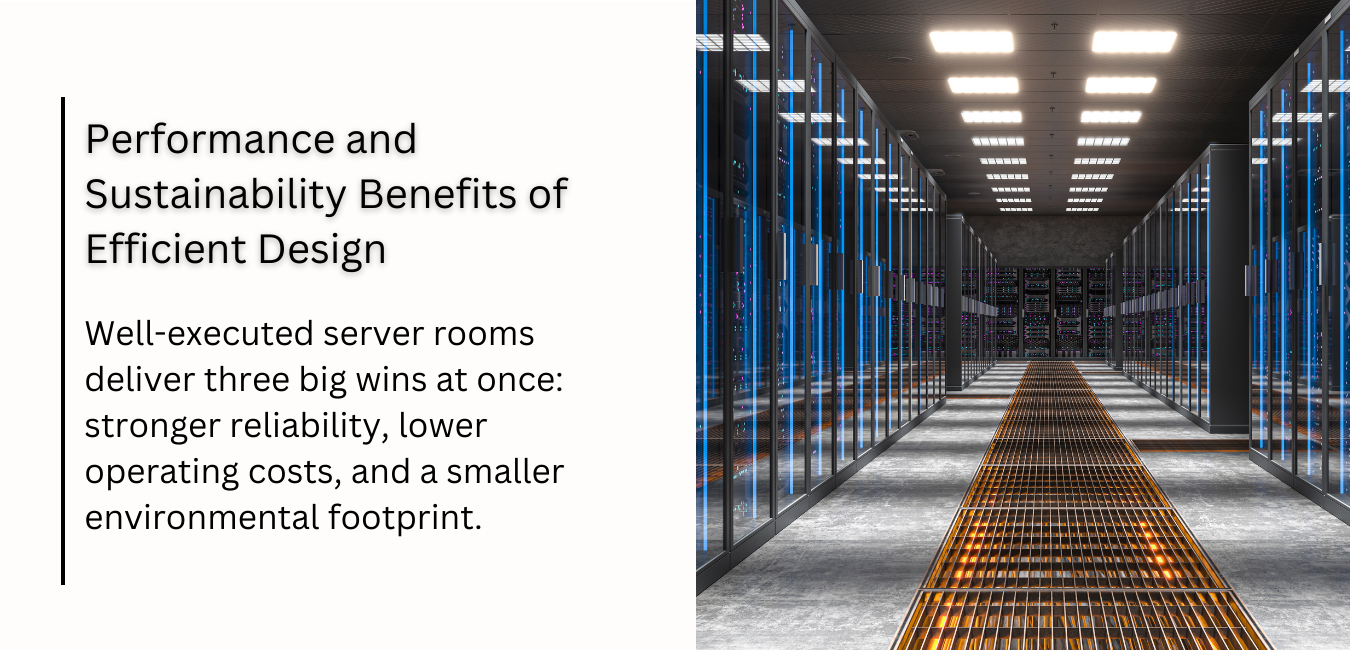
Well-executed server rooms deliver three big wins at once: stronger reliability, lower operating costs, and a smaller environmental footprint. Those gains appear both on utility bills and in everyday experience, and they mirror the goals of enterprise data center construction and industrial-scale energy-efficient server rooms.
Lower Power Usage Effectiveness (PUE)
PUE compares total facility energy to the energy directly used by IT devices. Lower numbers signal less waste in cooling, power distribution, and supporting systems. Borrowing airflow strategies and metering practices from data center builders helps push PUE downward, even in rooms that occupy only a fraction of a floor, and aligns residential designs with metrics used on large data center design, build, and construction programs.
Reduced Operating Costs and Environmental Impact
Every watt that does not have to be supplied or cooled turns into long-term savings. Over years of continuous operation, that difference accumulates into a meaningful reduction in the total cost of ownership. At the same time, efficient infrastructure cuts the property's carbon footprint, supporting local and regional climate commitments and echoing the sustainability targets that shape data center construction, energy-efficient server rooms, and large-scale mission-critical projects worldwide.
Increased Reliability for Mission-Critical Systems
Stable temperatures, clean power, and organized layouts reduce unplanned downtime and hardware failures. Security platforms, remote work environments, smart lighting, and AV systems all benefit when infrastructure simply works without drama. By treating residential server rooms as serious mission-critical projects, owners gain the same peace of mind enterprises seek for their core operations, especially when they follow patterns used by expert data center builders and experienced server room design services in complex data center construction efforts.
The Role of Professional Design-Build Teams
Complex server environments call for coordinated planning. Integrated teams turn high-level objectives into real rooms that perform as promised and stay flexible as needs evolve, a model familiar in data center design, build, and modern data center construction.
Why Server Room Design Services Matter
Specialized server room design services oversee capacity planning, equipment selection, cooling strategies, and pathways in concert with architects and engineers. They validate power and thermal assumptions before construction, then refine details during installation. That expertise lowers the risk of surprise limitations or chronic hot spots once the home is occupied and brings the same rigor used in energy-efficient server rooms, mission-critical projects, and enterprise data center construction into the residential realm.
Integrated Data Center Design Build for High-End Projects
Firms experienced in data center design and build bring structured processes for commissioning, testing, and documentation. Load tests, failover simulations, and performance checks confirm that the finished room matches design intent. This discipline, adapted from large-scale facilities, gives private owners confidence that their infrastructure can support demanding use cases from day one and reflects the integrated approach data center builders apply to high-stakes data center construction projects worldwide.
What Energy-Efficient Server Rooms Mean for Forward-Thinking Owners
For owners who plan decades ahead, digital infrastructure sits alongside structure, finishes, and landscape as a core investment. A smart home feels simple on the surface because the hidden systems underneath are strong, often borrowing principles from energy-efficient server rooms and commercial data center design and build strategies.
Enhancing Property Value and Capability
A home built around energy-efficient server rooms can support serious creative work, distributed teams, advanced security, and immersive entertainment without disruptive upgrades. Buyers who rely heavily on technology recognize that capability as a clear differentiator. The property becomes a ready-made platform for their digital lifestyle rather than a renovation project, especially when it reflects lessons from server room design services, resilient data center construction, and enterprise mission-critical projects.
Building Smarter, More Sustainable Environments
As smart buildings for AI expand into areas like predictive maintenance, adaptive comfort, and advanced access control, backend infrastructure needs to keep pace. Owners who invest in scalable, efficient server spaces set the stage for those future capabilities. Their properties stay aligned with both technological progress and evolving sustainability standards, similar to how data center builders and data center design build teams future-proof large campuses during early data center construction.
How Element Homes Designs Energy-Efficient Server Rooms for Intelligent Homes
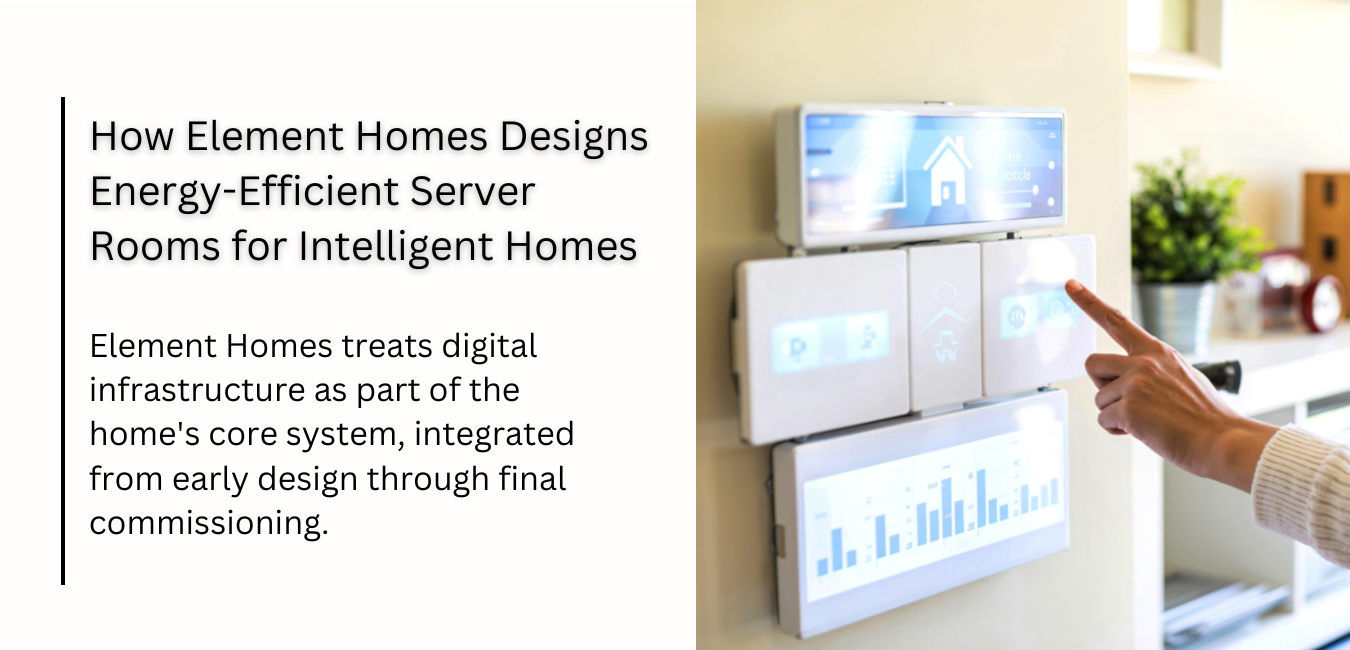
Element Homes treats digital infrastructure as part of the home's core system, integrated from early design through final commissioning. That mindset creates living environments that feel effortless while quietly handling complex technical demands, drawing on the same thinking behind energy-efficient server rooms, modern data center construction, and advanced data center design and build projects.
Applying Our Turnkey Model to Mission-Critical Residential Infrastructure
With our turnkey approach, we handle architecture, permitting, infrastructure, and construction under a single, unified process. That means we treat server environments as integrated mission-critical projects, not isolated technical rooms. From early planning, we fold server room design services into our broader data center design and build thinking, so power, cooling, and pathways are coordinated from the start.
Designing Server Rooms as Part of a Smarter Whole
We design server rooms, mechanical spaces, low-voltage hubs, and automation systems so everything works as one integrated system. Our goal is to build energy-efficient server rooms that support smart controls, renewable energy, and comfort throughout the home. By matching the server room to the needs of smart homes, we make living easy while managing complex tasks in the background.
Why Our In-House Team Makes the Difference
Our in-house team combines luxury home experience with knowledge from top data center experts. We coordinate early, assess performance needs, and stay involved through setup to ensure the final space matches the plan. This approach lets us deliver important projects that look great, run efficiently, and keep homes ready for the future.
Conclusion
As luxury homes become smarter, the server room quietly powers security, comfort, work, and entertainment. With careful planning, it delivers reliable performance, lower energy costs, and a smaller environmental impact, all underpinned by clean, thoughtful design.
Element Homes combines the best practices from energy-efficient server rooms, smart buildings, and data center design to create custom solutions for luxury homes. Work with our team to build a property that is strong, efficient, and ready for future technology.

Related POsts
Building a Luxury Custom Home in Atherton: Costs, Permits, Timelines & Design
Planning a luxury custom home in Atherton? Learn about costs, permits, timelines, tree rules, design choices, and what to review before construction.
Read moreFixed-Price vs. Cost-Plus Construction Contracts: Which Is Better for a Custom Home?
Compare fixed-price and cost-plus contracts for a custom home. Understand costs, flexibility, risks, change orders, and which option fits your project.
Read more