

What Is a Preconstruction Service Agreement? A Guide for Custom Home Clients


.png)
What Is a Preconstruction Service Agreement?
A Preconstruction Service Agreement (PCSA) is a paid planning agreement between a homeowner and a custom home builder before the final construction contract is signed. It helps clarify the home’s budget, site feasibility, design coordination, permit requirements, schedule, and construction risks early. For California custom homes, a PCSA is especially useful because local codes, Title 24 rules, fire zones, coastal reviews, hillside lots, and city permits can affect the final cost and timeline.
Building a custom home should feel exciting, but the first stage often comes with big questions. What can the site handle? Will the design fit the budget? How long will permitting take? Is the estimate realistic, or is it only a rough guess?
A Preconstruction Service Agreement, or PCSA, as it’s commonly known, helps address such questions before the final build contract is signed. It is a paid planning agreement between a builder and home owner. During this phase, the builder examines drawings, reviews the site, works with consultants, prepares early pricing, and formulates a viable plan for home construction.
This procedure can be very useful for California homeowners. Local codes, energy regulations, coastal evaluations, fire zones, hillside characteristics, and city permitting can all impact the plan. A preconstruction agreement offers you a little bit of time to get to know those details before crews show up and before greater financial commitments are made.
At Element Homes, this early planning approach supports a smoother build experience from the first serious conversation.
Preconstruction Service Agreement Checklist for Custom Homes
Why a PCSA Matters Before the Build Starts
A PCSA gives structure to the early stage of home construction. Without it, a client may receive a quick estimate that misses design details, engineering needs, site conditions, utility work, or permit requirements. Those gaps can create pressure later.
The builder joins the conversation early
Many homeowners start with an architect, then go on to design plans, and then, toward the end of design, ask builders for estimates. That technique can result in a stunning plan that’s tough to construct within the budget you want. Experienced custom home builders can provide practical input before the design is set in stone.
The builder analyzes layout, access, structural, materials, finish goals, and the construction process during preconstruction planning. This enables the design team to make better selections while the drawings can still be changed.
The project becomes clearer
A PCSA turns loose ideas into real information. Instead of relying on a vague number, you receive a defined planning process with useful deliverables.
Common early tasks may include:
- Site access and feasibility review
- Budget modeling based on current drawings
- Coordination with architects and engineers
- Permit path review
- Value engineering ideas
- Early schedule input
What Is Included in a PCSA?
Each builder designs preconstruction services differently, but the end goal is usually the same. The team reviews the project before the final contract so the homeowner may move forward with improved cost, scope, and scheduling understanding.
Design and engineering coordination
A builder may work with the architect, structural engineer, civil engineer, interior designer, and other consultants. The purpose is to review drawings for buildability, budget impact, and coordination issues.
This is important in California since one design decision can impact structure, energy compliance, fire safety, drainage, or city review. Good custom home builders will identify these concerns early and explain them in layman’s terms.
Site evaluation and feasibility
The land can make or break the whole project. A city lot is not the same as a coastal piece, a hillside site is not the same as a rural property. Site study may include slope, soil, drainage, utilities, driveway access, staging, easements, and local zoning.
Preconstruction planning gives the team time to review surveys, geotechnical reports, utility needs, and agency comments before home construction begins. This can prevent delays that come from discovering site problems too late.
Budgeting, scope, and allowances
One of the most valuable parts of preconstruction services is a stronger budget. A careful builder does not price from hopes and assumptions alone. The team reviews drawings, studies materials, speaks with trade partners when needed, and builds a cost model around the actual project.
A preconstruction agreement can also define allowances for cabinets, tile, appliances, plumbing fixtures, lighting, windows, doors, flooring, and other selections. This makes the estimate easier to understand because you know what finish level has been included.
Why California Projects Need Strong Planning
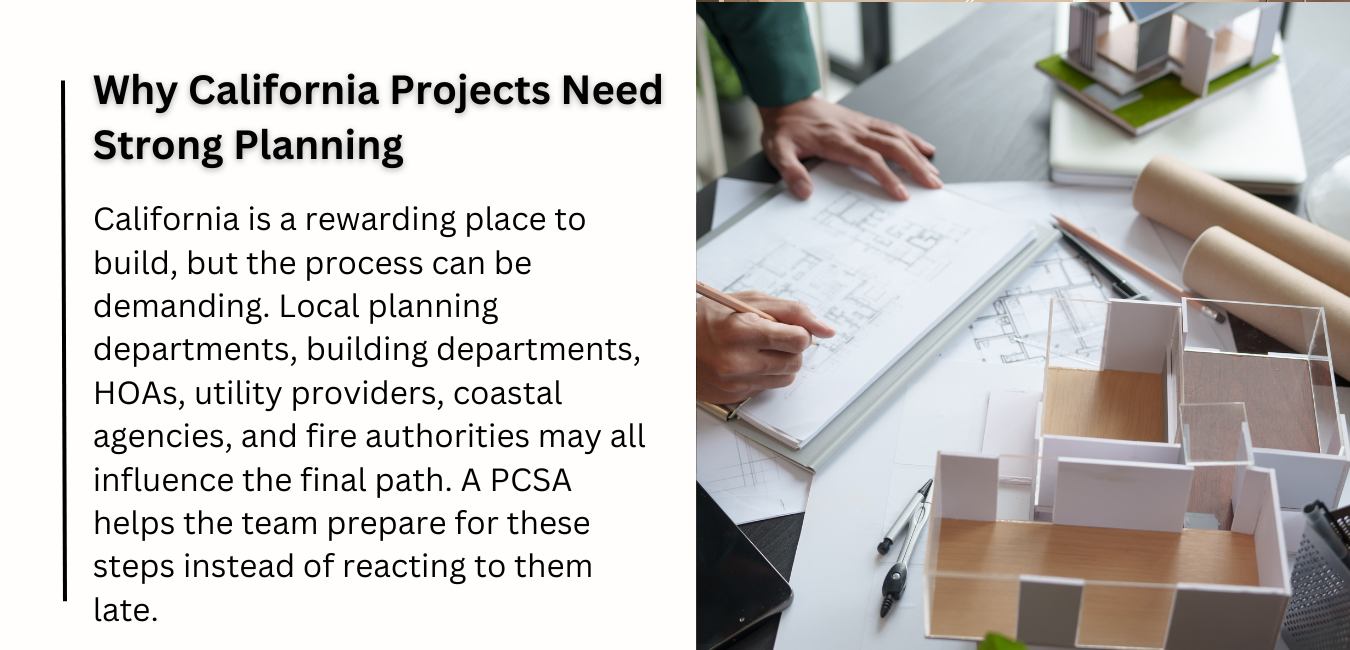
California is a rewarding place to build, but the process can be demanding. Local planning departments, building departments, HOAs, utility providers, coastal agencies, and fire authorities may all influence the final path. A PCSA helps the team prepare for these steps instead of reacting to them late.
Permits and agency reviews can affect the schedule
Permitting is often one of the biggest schedule drivers in home construction. During preconstruction planning, the builder and design team can review submittal needs, consultant reports, Title 24 documentation, structural calculations, drainage requirements, and neighborhood rules.
For homeowners comparing custom home builders, permit knowledge is important. A builder who understands local review steps can guide the process with fewer surprises.
Costs can shift before the contract is signed
Pricing of materials and labor can alter as the design progresses. Windows, steel, concrete, electrical gear, roofing and finish materials can be a major factor in the overall. A PCSA allows the builder the ability to change numbers as drawings become more apparent.
This is where a preconstruction agreement gives the owner better control. If the budget is moving too high, there is still time to adjust size, structure, materials, or finish levels before the full contract is signed.
Key Benefits for Homeowners
The value of a PCSA goes beyond pricing. It gives the homeowner a calmer way to make decisions, compare options, and understand what the build will require.
Better financial visibility
A quick estimate may help start a conversation, but it rarely gives enough detail for a major decision. Preconstruction services create a clearer view of what drives the budget. You can see where the money is going and where changes may help.
This is useful when reviewing square footage, outdoor spaces, window packages, rooflines, structural spans, and finish levels. It gives you a chance to choose what truly matters before the build starts.
Clearer deliverables
At the end of the PCSA phase, the homeowner may receive organized documents that support the next decision. Depending on the agreement, deliverables may include:
- Updated drawings and consultant notes
- A detailed budget or guaranteed maximum price
- Scope clarifications and allowance details
- Early schedule information
- Permit coordination notes
These deliverables give the project shape. The vision has drawings, cost logic, timing, and a path forward.
What Happens If You Do Not Build?
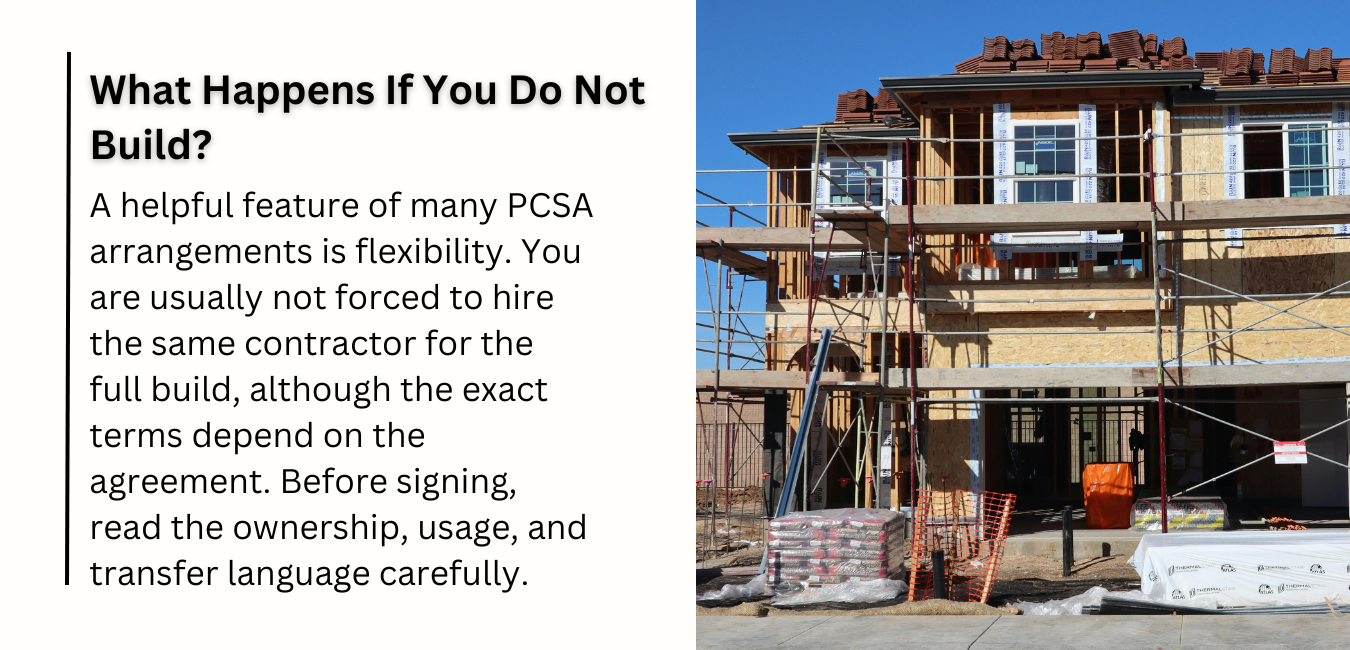
A helpful feature of many PCSA arrangements is flexibility. You are usually not forced to hire the same contractor for the full build, although the exact terms depend on the agreement. Before signing, read the ownership, usage, and transfer language carefully.
You may still keep useful work
If the project pauses or you decide to interview other custom home builders, the planning work may still help you. Drawings, reports, permit notes, and scope information can give you a stronger foundation for the next step.
A preconstruction agreement should explain what belongs to you, what can be shared, and what remains internal to the builder. This protects both sides.
A pause can still be a smart outcome
Sometimes the planning phase reveals that the project requires a change. You may need to alter the budget. The timeline could need some more room. There may be unforeseen work at the site. It is not discouraging to learn this before full home construction is begun.
Smart preconstruction planning gives you choices. You can refine the design, hold the project, change the scope, or move forward with confidence.
How Pre-Con Services Are Priced
Preconstruction services fees vary based on project size, design phase, location, site complexity, and level of collaboration required. A simple plan review can be less expensive. A hillside or coastal property may call for a deeper analysis for a ground-up custom home.
Common fee structures
Builders may price this phase in several ways:
- A flat fee for a defined list of services
- Hourly billing for meetings, reviews, and coordination
- A percentage of the estimated construction cost
- A fee that may be credited if you sign the final build contract
The PCSA should state the fee, payment schedule, deliverables, meeting expectations, and any future credit in clear writing.
What affects the price
The cost will depend on the amount of work involved by the constructor. And also professional time for consultant meetings, permit research, trade partner pricing, budget updates, site visits, value engineering, and schedule review.
The goal is to receive reliable guidance before committing to a large home construction investment.
The best custom home builders treat preconstruction services as a working partnership, not a sales shortcut.
Conclusion
A PCSA gives homeowners a better way to begin a major build. It brings the builder into the planning process early, connects design with budget, and helps reveal site or permit concerns before they become expensive problems.
For anyone planning a custom home in California, a preconstruction agreement can be the difference between guessing and making informed decisions. With careful preconstruction planning, the full project starts with stronger drawings, clearer pricing, and a better understanding of what comes next.
Ready to plan your project?
Element Homes helps clients think through design, budgeting, feasibility, and construction strategy before the build begins. If you are preparing for your next custom home, contact us today to discuss your goals, site, timeline, and budget.
Frequently Asked Questions
What is a Preconstruction Service Agreement?
It is a planning agreement that the homeowner pays to the builder before the final construction contract. This helps determine scope, budget, timeline, site conditions, consultant needed, and permit steps.
Is a PCSA required before building?
It is not always required, but it is useful for complex California projects. If the design, lot, budget, or permitting path is detailed, a PCSA can reduce risk early.
How long does this phase take?
The timetable depends on the level of design and the complexity of the project. Some projects take a few weeks. Detailed builds from the ground up may take a few months for the final cost.
Can I choose another builder later?
In many cases, yes. The agreement should state which documents you can keep and how they may be used. Review those terms before signing.
Does the fee apply to the final contract?
Some builders credit part or all of the fee if you hire them for construction. Others treat it as a separate service. Ask for the credit policy in writing.

Related POsts
Fixed-Price vs. Cost-Plus Construction Contracts: Which Is Better for a Custom Home?
Compare fixed-price and cost-plus contracts for a custom home. Understand costs, flexibility, risks, change orders, and which option fits your project.
Read moreTop Data Center Contractors in California: How to Choose the Right Builder in 2026
Choose top data center contractors in California by reviewing power access, cooling, permits, cost planning, and timelines before you build.
Read more