

Tiny Home vs Traditional Home in California: Costs, Space, and Long-Term Value Compared


.png)
California homeowners often weigh comfort, budget, and long-term value. A compact residence can support simple living, rental use, or an ADU. A traditional home can give families room to grow, strong resale appeal, storage, and privacy.
Both choices can be beautiful and functional, based on the land, lifestyle, budget, and future needs of the customer. At Element Homes, our clients generally compare smaller homes to standard homes before deciding on the best way to go. If done properly, careful design & planning can make either option feel at ease, and practical.
Understanding the Two Housing Choices

Different priorities have shaped these two types of homes. One is designed for efficiency and ease of moving, while the other has more room, the option to create multi-use areas, and a layout that resembles that of a traditional home. In California, both types of homes will also be determined by zoning, utilities, building permits and the physical conditions of the site.
What Defines a Smaller Home?
A tiny home is usually under 400 square feet. The layout relies on smart storage, compact appliances, built-ins, lofts, and multipurpose furniture.
Some compact homes are movable, while others sit on permanent foundations. In many California cities, a foundation-based unit may be easier to approve for full-time use or as an ADU.
What Defines a Larger Residence?
A traditional home usually includes bedrooms, larger living areas, storage, garages, and spaces for work, guests, family routines, and outdoor living.
This works well for owners who want long-term flexibility.
Why the Choice Matters
Your choice can impact financial arrangements, permits, upkeep, resale prospects and living comfort. design & planning at the beginning of your project will help you see the advantages and disadvantages in the cost to you of each available pathway, plus which design approach supports your lifestyle better than another.
Cost Comparison in California
Cost is generally a prominent factor when determining if a tiny house is the right choice. While tiny homes typically have lower total costs than typical homes, constructing a traditional home tends to require a more extensive budget due to larger amounts of square footage, land, labor, materials, etc.
Compact Home Costs
A tiny home in California may cost around $30,000 to $100,000 or higher. Pricing depends on the structure type, finishes, foundation, utility connections, appliances, permits, and custom storage.
The total price may be lower, but the cost per square foot can be high. Kitchens, bathrooms, plumbing, and electrical systems are concentrated into a small area, which requires careful home construction work.
Larger Home Costs
A traditional home in California usually sells for $200,000 - $300,000 and prices will most likely be much higher in coastal, hillside and/or luxury areas of the state. Many factors create your final home cost including land cost, design and plans, engineering/architecture, labor, permits, and construction materials.
A larger project has a higher total cost, yet the cost per square foot can be easier to manage.
Costs Homeowners Should Review
Before home construction begins, look beyond the structure itself. Helpful budget items include:
- Land or lot preparation
- Foundation work
- Utility hookups
- Septic or sewer connections
- Permits and inspections
- Driveway and site access
- Interior finishes
- Long-term upkeep
Space, Comfort, and Daily Living

The space in a house impacts day-to-day living. Smaller homes often lead to simpler patterns of daily life, less maintenance required and more organized living than larger homes. Larger homes provide the ability to create separated spaces for privacy, more storage or room for guests or hobbies, and flexibility for how the house may evolve with a growing family.
Life in a Compact Layout
A tiny home is great for folks who like to have less stuff and less maintenance routine. It might be for single owners, couples, retirees, guests, tenants or family.
Good design & planning are essential. A dining table may become a desk, stairs may hold storage, and a sofa may turn into a bed.
Life With Extra Room
A traditional home gives owners separate bedrooms, larger kitchens, laundry areas, offices, playrooms, garages, and outdoor spaces.
This extra room can support changes. A bedroom can become an office, guest room, or nursery.
Matching Space to Lifestyle
Size should not be the main criteria for any choice. The appropriate home is the place that supports your true behaviors. Some people are happy with less space while others want space for family routines, entertaining and future goals.
Long-Term Value and Investment Potential
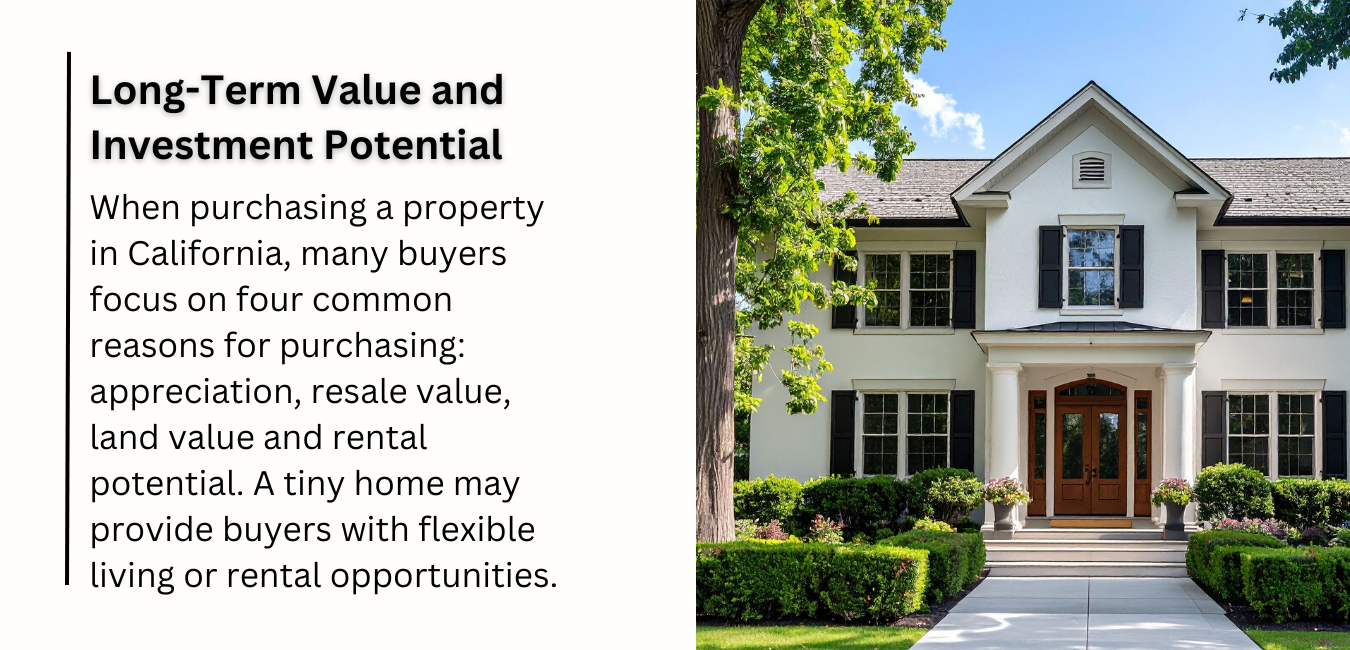
When purchasing a property in California, many buyers focus on four common reasons for purchasing: appreciation, resale value, land value and rental potential. A tiny home may provide buyers with flexible living or rental opportunities. However, traditional homes have a much broader resale market than tiny homes.
Appreciation and Resale
A permanent traditional home can create substantial value over time as land and location often drive appreciation in California.
A portable, tiny unit could have depreciated with age. A unit in an ADU or foundation can be distinct because it becomes part of the property and offers useful living space.
ADU Opportunity
A tiny home utilized as an ADU can be helpful for rental revenue, guest lodging, multi-generational living, or a private office. California ADU restrictions have made modest secondary houses popular with a lot of property owners.
When planned well, an ADU can improve both daily function and property appeal.
Lifespan and Maintenance
A well-built custom home can survive generations with the right care. Smaller homes may translate to less utility usage and less cleaning, whereas larger homes might translate to more general maintenance for roofing, HVAC, landscaping and finishes.
Both alternatives are important with quality materials and professional building procedures.
Design, Planning, and Builder Support

Every great endeavor begins with a clear plan. Designing in a small home requires precision, whereas larger homes provide the design team the ability to create unique rooms.
Planning a Smaller Layout
For a compact dwelling, designers must consider flow, light, storage, ceiling height, positioning of furniture, placement of utilities.
Experienced home builders know that small design mistakes look bigger in tight spaces. The positioning of a cabinet, window, appliance or stair can influence the way a room operates.
Planning a Larger Layout
For a larger residence, design & planning often focuses on privacy, room relationships, outdoor access, natural light, and long-term flexibility.
This process gives owners the chance to create gathering spaces, quiet rooms, guest areas, and storage zones that fit their daily habits.
Custom Features for Both Homes
A custom home approach can be any size. Owners can select finishes, cabinetry, energy systems, indoor-outdoor connectivity, smart home features and storage options.
Element Homes assist clients shape these aspects early on that the final plan seems unique, practical and buildable.
Building Considerations in California
A good home construction project demands understanding of structure, safety, code and most importantly craftsmanship. So this matters for compact structures, ADUs and full-sized homes.
Why Experience Matters
Experienced home builders know what permits are needed, what challenges are on the site, utility limits, foundation needs and cost risks before they become huge problems.
They also arrange architects, engineers, inspectors, suppliers and crews.
California Rules and Site Conditions
Projects can touch on seismic standards, fire safety, energy codes, coastal rules, hillside requirements, utility upgrades and municipal inspections.
Taking these elements into account the build should be seen as a guided process rather than a fast buy.
Quality at Any Size
A custom home does not need to be large to feel refined. Good proportions, durable materials, efficient systems, and careful craftsmanship can make any home feel comfortable and lasting.
Comparison Table
Which Option Fits Your Goals?
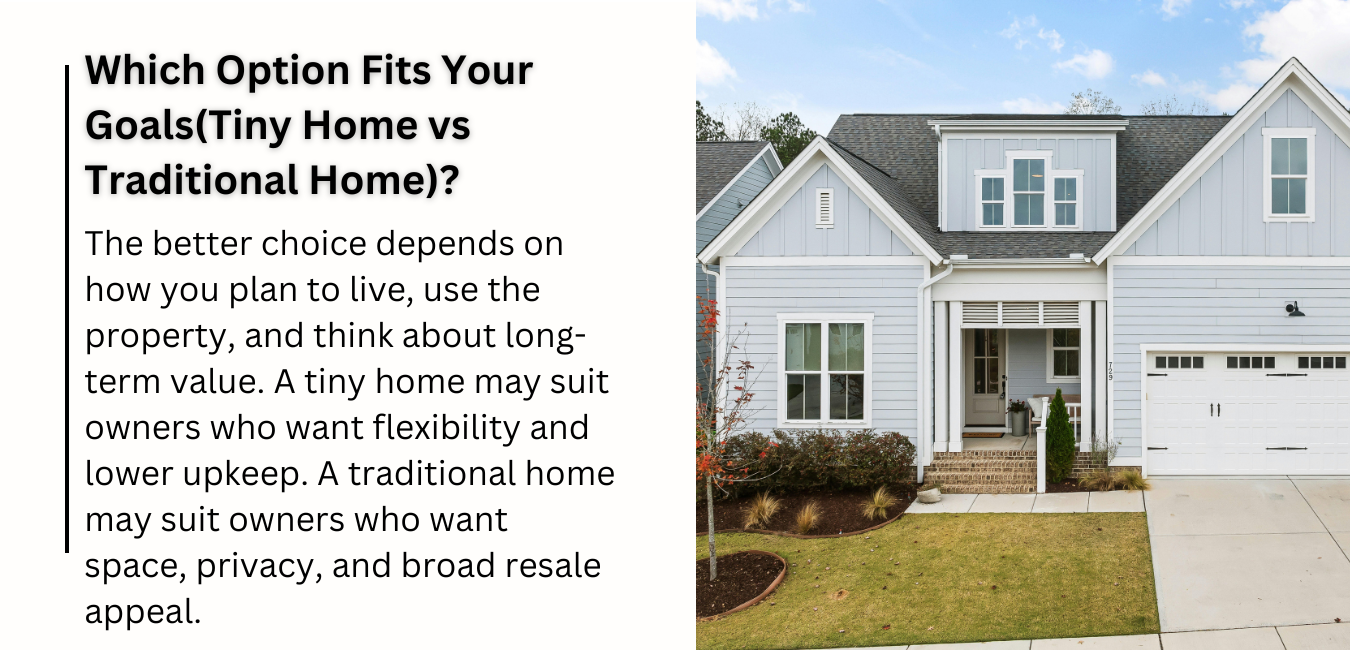
The better choice depends on how you plan to live, use the property, and think about long-term value. A tiny home may suit owners who want flexibility and lower upkeep. A traditional home may suit owners who want space, privacy, and broad resale appeal.
Choose Based on Priorities
Think about budget, land, family needs, rental goals, storage, privacy, and maintenance. A clear list helps you compare both options without focusing only on price.
Think About Local Rules
Some cities require permanent foundations, approved utility connections, parking plans, setbacks, and fire access.
Reliable home builders can review local requirements before major home construction decisions are made.
Plan for the Next Ten Years
Your life may change. Work, family, income, health, and lifestyle goals can shift. Strong design & planning help your home continue to serve you well.
Conclusion
A tiny home and a traditional home can both be smart choices in California. One can offer lower maintenance, ADU potential, and flexible use. The other can provide generous space, long-term comfort, and broad market appeal.
The right decision comes from honest budgeting, thoughtful planning, and a clear understanding of your property. With skilled home construction, either path can lead to a home that feels useful, beautiful, and built around your life.
If you are comparing a compact residence, ADU, or full-size custom home, Element Homes can help you review the options, understand costs, and move forward with confidence. Contact us today to discuss your project.
Frequently Asked Questions
Should you build a tiny home or a traditional home in California?
Choose based on your budget, land, lifestyle, and future plans. A tiny home can work well for simple living, ADU use, or rental income. A traditional home may fit better for families, long-term ownership, and larger daily routines.
How do custom home builders design tiny homes and traditional homes differently?
Home builders design smaller homes around storage, flow, and multifunctional rooms. Larger homes allow wider layouts, private spaces, and future flexibility. Both need smart planning and strong craftsmanship.
What are the long-term benefits of investing in a tiny home vs a traditional home?
A compact ADU may create rental income and add useful space to a property. A larger residence may build equity through land value, location, and long-term market demand.
How much does home construction cost for tiny homes compared to traditional homes in California?
A compact build may start around $30,000 to $100,000 or higher, depending on features and utility needs. A larger residence usually costs several hundred thousand dollars or higher, depending on location and scope.
Can a tiny home or ADU increase the value of your California property?
Yes. A well-built ADU can add flexible living space, support rental income, and improve the property's function. Value depends on location, legal approval, build quality, and buyer demand.

Related POsts
Building a Luxury Custom Home in Atherton: Costs, Permits, Timelines & Design
Planning a luxury custom home in Atherton? Learn about costs, permits, timelines, tree rules, design choices, and what to review before construction.
Read moreFixed-Price vs. Cost-Plus Construction Contracts: Which Is Better for a Custom Home?
Compare fixed-price and cost-plus contracts for a custom home. Understand costs, flexibility, risks, change orders, and which option fits your project.
Read more